
What lingerie looked like 250 years ago
A little sexy history lesson in honor of America's 250th birthday
America is turning 250 this year. While everyone is thinking about fireworks, founding fathers, and flag-waving parades, I got curious about something a little different.
What kind of lingerie were women actually wearing in 1776?
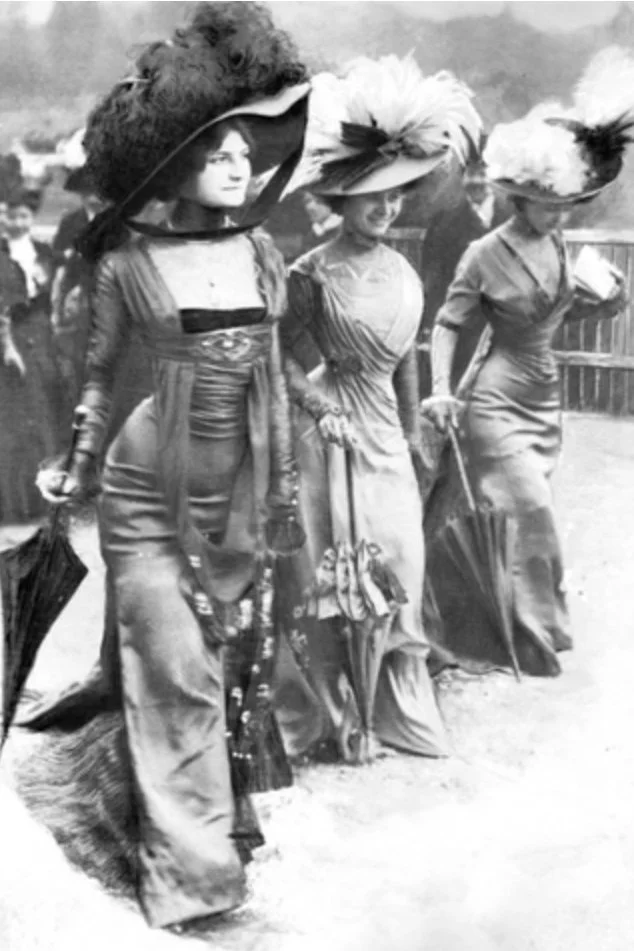
Women have always had an intimate relationship with what they wear next to their skin. That has never changed. What has changed is everything else, like the fabrics, the structure, the rules, and who got to feel beautiful in the first place.
Here is what it actually looked like.
The first layer was the chemise
Every woman in 1776, wealthy or not, started her day by putting on a chemise.
It was a loose, full-cut linen or muslin shift worn directly against the skin — long-sleeved, falling to the knee, and almost always white or natural linen. No color. No embellishment on the body of it. But the neckline? That was often edged with delicate lace.
The chemise was the one garment that touched a woman's body all day. It protected her skin from the structure going on top of it. And in her boudoir, French for her bedroom, it was often all she wore. Thin, soft, and by the standards of 1776, quite intimate.
Think of it as the closest thing they had to what we would call a slip today.
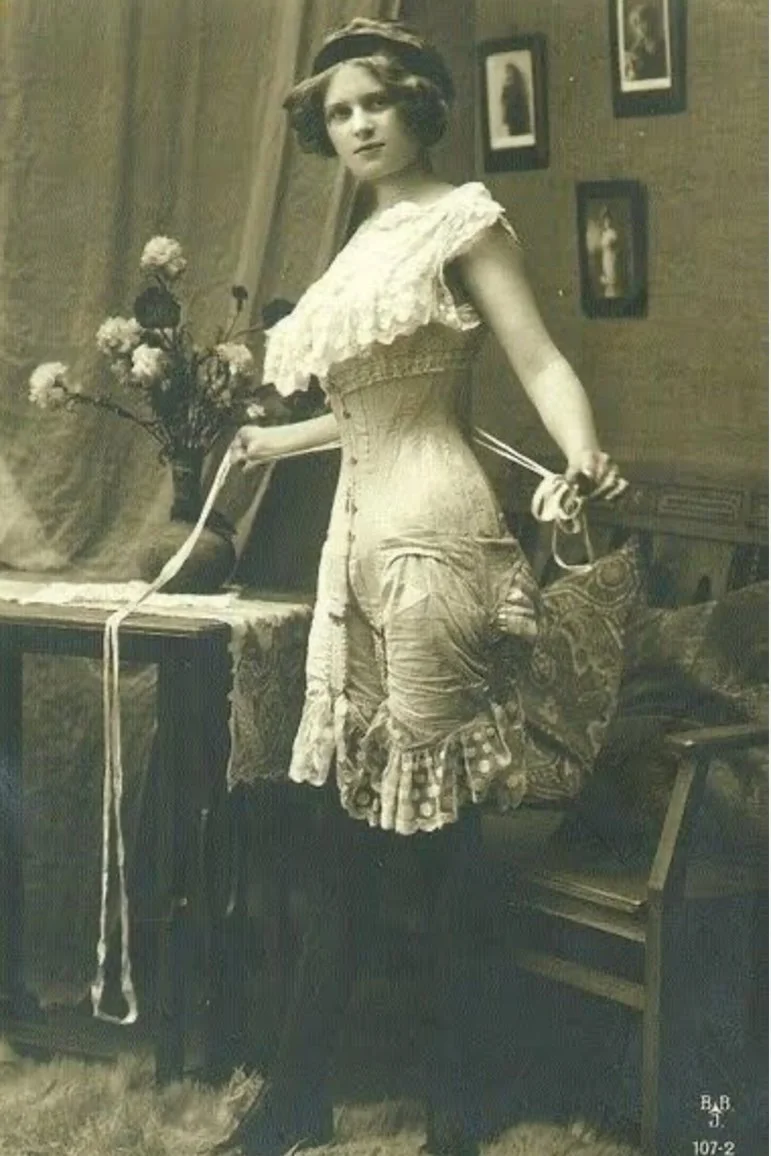
The second layer were stays.
Over the chemise came stays, a term I never heard of and this is where things get really interesting.
Stays were the predecessor to the corset, but they worked differently than most people imagine. They were semi-rigid undergarments that supported the torso and stopped at the waist. Historians who study them note they were "as comfortable as a modern bra" when properly fitted. They were foundation garments engineered to shape and support.
Wealthy women had their stays made with whalebone an actual baleen harvested from the mouths of baleen whales. They were inserted between parallel stitches to create structure. The boning pushed the bust up and forward, creating a very pronounced, lifted feminine silhouette. The shape the era was after was an upside-down cone: narrow waist, lifted bust, shoulders pulled back and open.
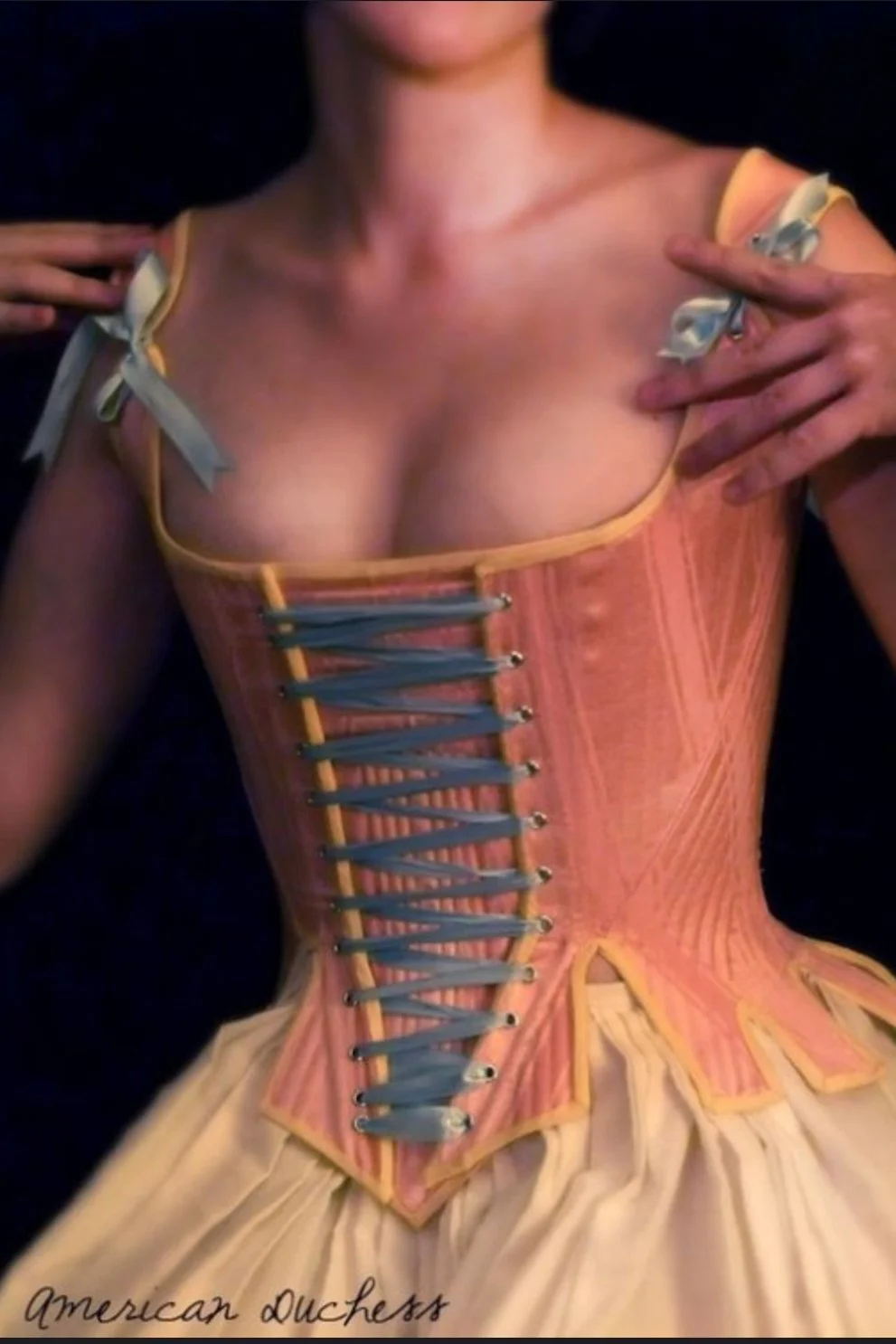
Stays were often beautiful objects in their own right. Some were made of silk. Some were embroidered. Some came in deep reds, soft blues, cream. A woman of means did not have plain, she had stays that were lovely to look at, because they were seen. In the boudoir, in her private moments, the stays were visible. They were part of the intimate picture.
One detail that surprises most people the stays were strapless through much of the 1770s. And by the 1780s, as necklines dropped even lower, horizontal boning across the bust became more common, specifically to allow the breasts to sit nearly fully exposed above the garment without spilling over. Women in this era were far less covered than history tends to suggest.
The busk is the hidden personal object
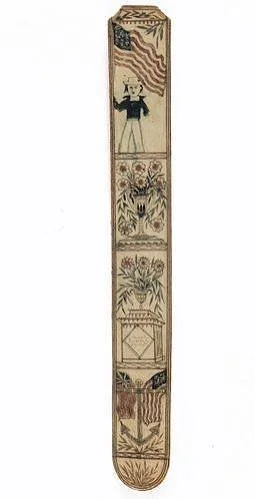
Tucked into the center front of the stays was a piece called a busk. It’s a long, flat piece of wood, bone, or ivory that kept the front panel smooth and rigid.
Here is the detail I love most about this. Sailors who worked on whaling ships, the same ships harvesting whalebone for stays, would carve decorative busks out of baleen as gifts for their wives and sweethearts. They would engrave them with hearts, ships, flowers, initials. A woman would slide this carved, personal object into the front of her stays and wear it against her body all day.
It was the most intimate gift a man could give a woman.
The déshabillé is when undressed was fashionable
In the private world of the boudoir, there was a specific state of dress that was considered both acceptable and deeply appealing, the déshabillé.
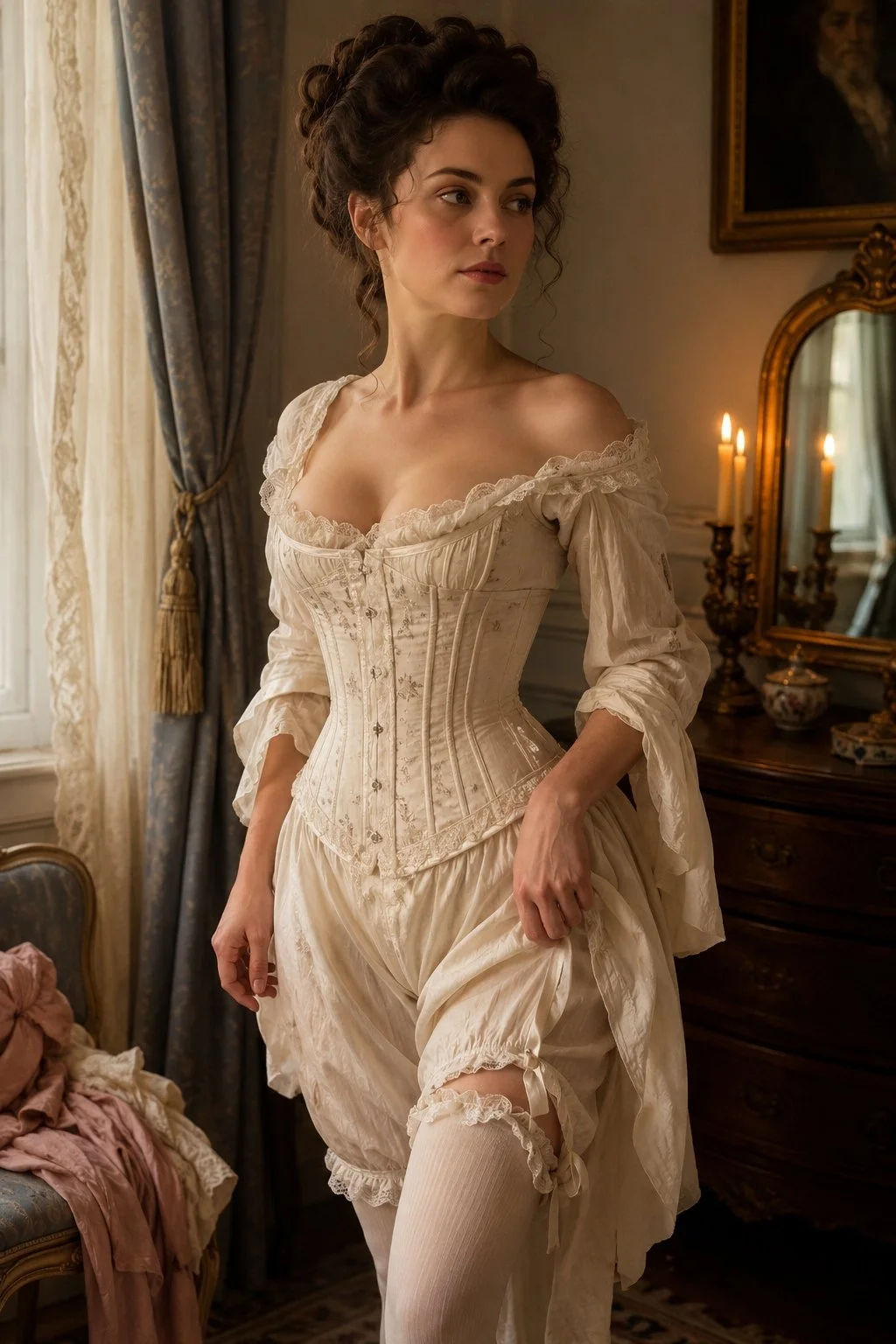
The word is French, and it means simply "undressed" — but in the 1700s it described something very specific. A woman in déshabillé wore her chemise, her loosely laced stays, perhaps a light silk wrapper or robe over the top. Hair down or loosely pinned. The formal layers of the day removed.
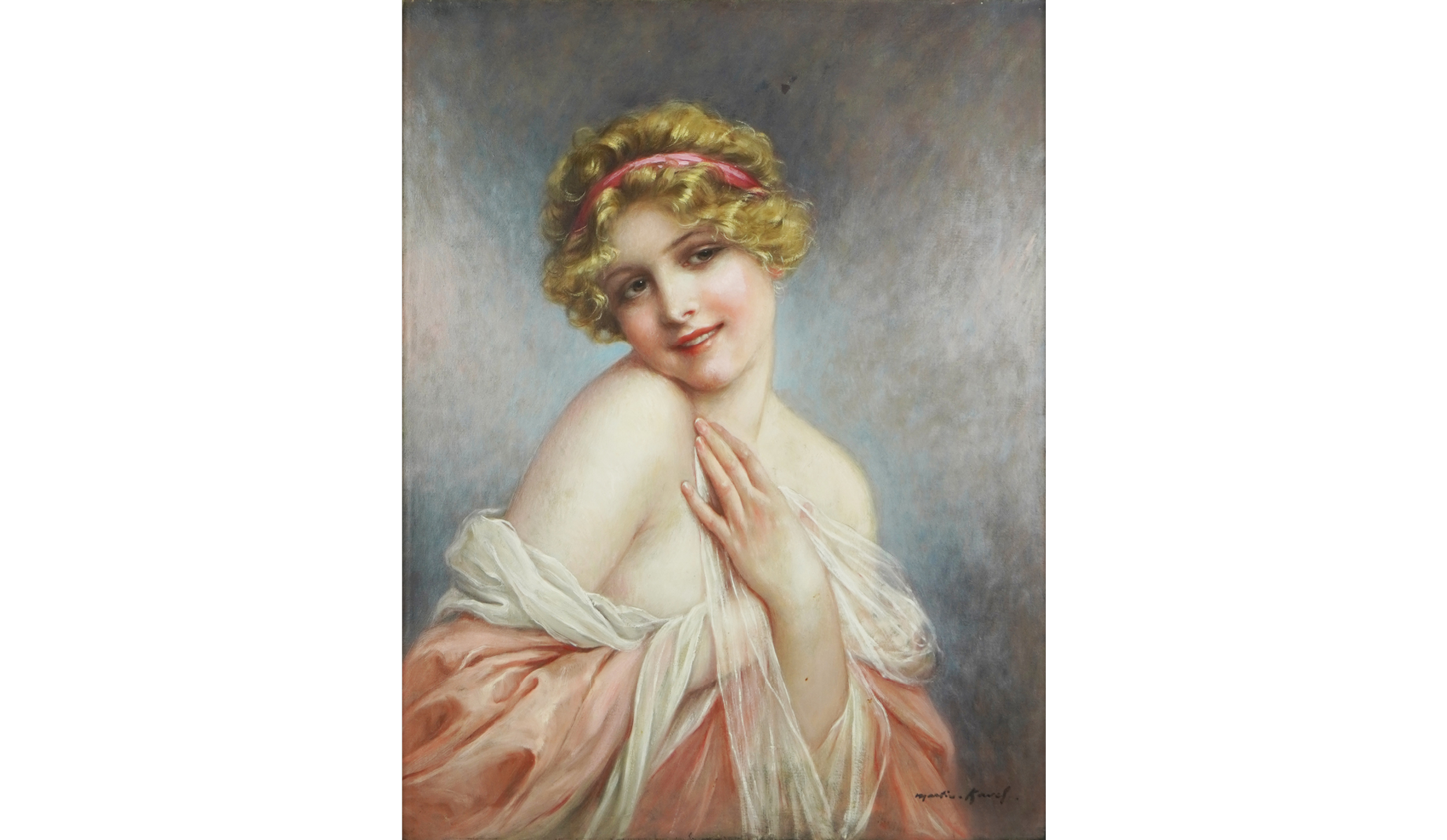
Wealthy women were actually painted this way. French artists like Fragonard made entire careers capturing women in their private, loosely dressed moments and these paintings were considered sophisticated and beautiful, not scandalous.
What I like about this is how intentional it was. A woman in déshabillé in 1776 was not simply undressed. She had chosen to be seen that way. And today some frown on this simple look.
What there was not
No underwear. Not in the modern sense. Drawers, what we would now call underwear, did not become common for women until the early 1800s. In 1776, beneath the chemise, there was nothing.
No bra with underwire. No elastic. No quick changes.
Getting dressed was a commitment. Getting undressed was too.
What has never changed
Two hundred and fifty years later, the details of lingerie are completely different. The fabrics are lighter. The structure is optional. There is no whalebone involved. Even though most complain it’s uncomfortable, compared to 250 years ago, it’s not, lol.
But the thing underneath all of it, the reason a woman thinks carefully about what she wears next to her skin, the reason intimate clothing has always been personal and deliberate, that has not changed at all.
Women have always known that what you wear in private says something true about you. From the styles, to the colors, It always has.
We just have more options now.
One more thing
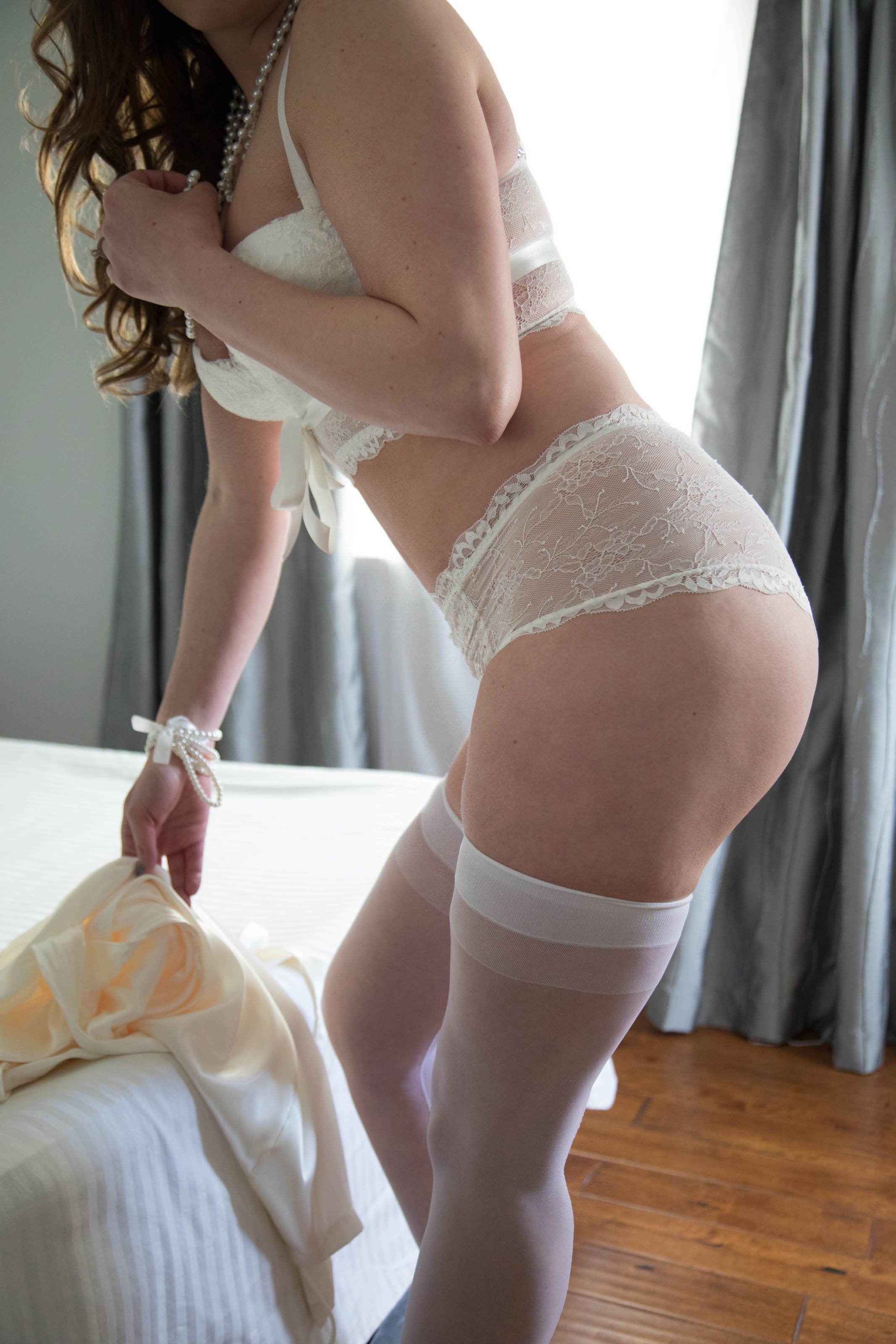
When a woman comes to Jules Secret, she thinks about what to bring. What to wear. What feels like her. That instinct is not new. It goes back further than any of us.
Jules Secret is a luxury boudoir studio in Haddon Heights, NJ, serving South Jersey and the greater Philadelphia area. If you have been thinking about this, here is where to start: go.julessecret.com or call us at 856-696-3968